What is AEO (Answer Engine Optimization) in 2026

Jump to
AEO (Answer Engine Optimization) is the practice of making your brand show up in AI-generated answers.
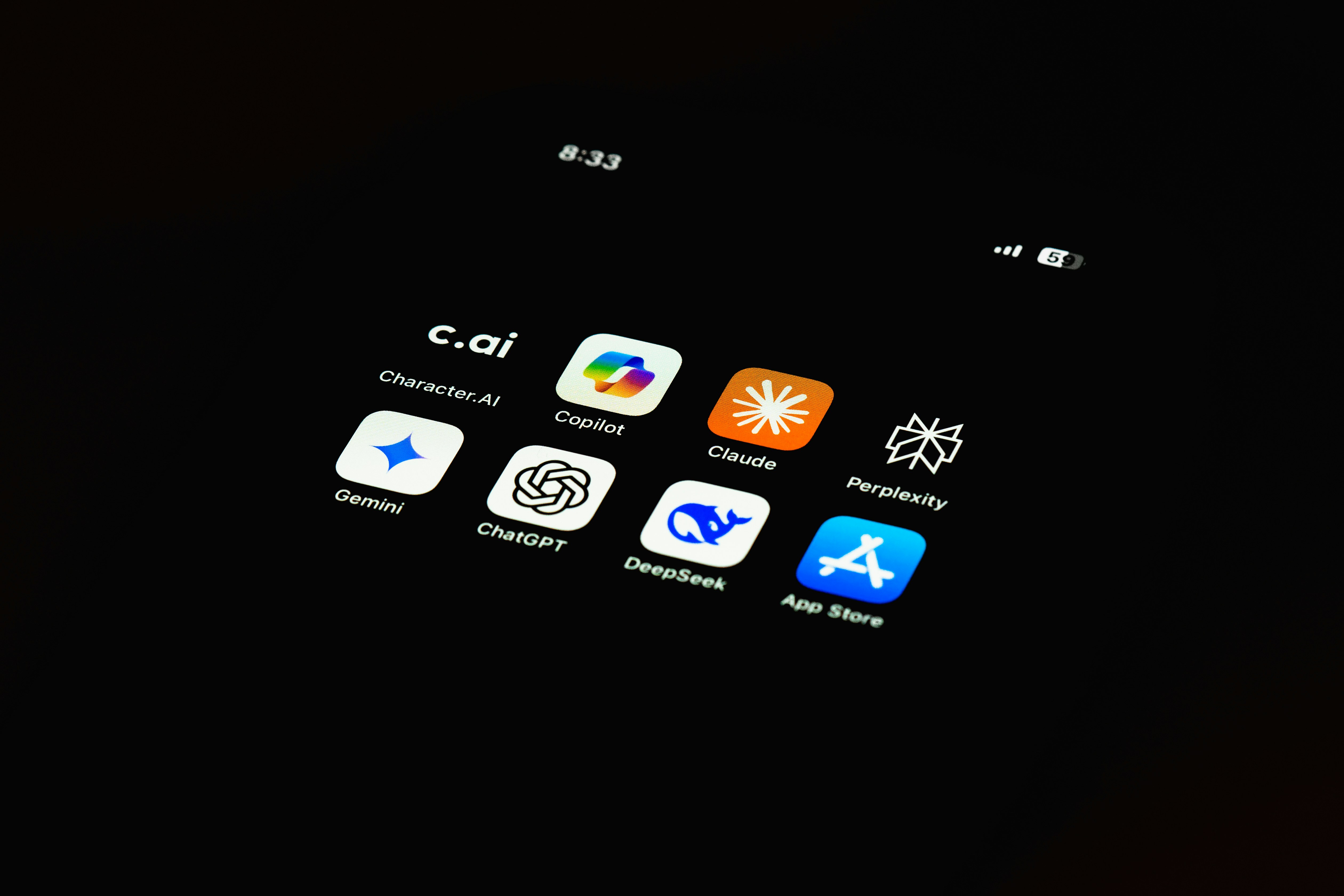
It focuses on three outcomes: mentions, citations, and recommendations. Applies to answer engines like ChatGPT, Perplexity, Gemini, and Copilot.
SEO optimizes for rankings and clicks. AEO optimizes for how AI explains and suggests options.
You track progress with metrics like AI visibility, share of voice, recommendation rate, and citation coverage.
Key takeaways
AEO is about how AI forms answers.
You optimize for three outputs: mention, citation, recommendation.
You need real buyer-like questions. These are your scenarios.
You need proof. You also need pages AI can read fast.
You need a loop: change → measure → improve.
Choose your path
Marketing / Brand: fix how AI defines you. Improve mentions and citations. Go to Narrative + Proof.
Sales / Revenue: win recommendations in “best / vs / alternatives” answers. Go to Comparisons + Prompts.
Agencies: run AEO as a monthly service. Track visibility and report lifts. Go to Playbook + Checklist.
AEO definition
AEO (Answer Engine Optimization) is the work of making your brand appear in AI-generated answers. It focuses on three outcomes: mentions, citations, and recommendations. It applies to answer engines (for example: ChatGPT, Perplexity, Gemini, Copilot).
In one line
AEO helps AI explain and suggest your brand for the right questions.
What AEO optimizes for
Mention: your brand is included in the answer.
Citation: your pages are used as sources or references.
Recommendation: AI suggests your brand as a best-fit option.
How you measure AEO (one line)
Track AI visibility, share of voice, recommendation rate, and citation coverage.
What AEO is NOT
It is not keyword stuffing.
It is not only Google rankings.
It is not only “prompt hacks”.
It is not a one-time audit. It is an ongoing loop.
The 3 outputs you want: mention, citation, recommendation
Mention
AI includes your brand in an answer.
Example: “Top options are X, Y, and YourBrand.”
How to measure: count how often you appear across your target scenarios.
Citation
AI uses your pages as a source. It may show a link, a quote, or a “according to” reference.
Example: “According to YourBrand’s documentation…”
How to measure: track citation coverage (how often your domain is used as a source).
Recommendation
AI suggests your brand as a best-fit choice.
Example: “Choose YourBrand if you need [specific use case].”
Common patterns: “best for…”, “pick X when…”, “I recommend…”.
How to measure: track recommendation rate (how often AI actively suggests you).
Good AEO improves all three.
Recommendation is usually the hardest. It needs a clear narrative and strong proof. Next, let’s look at what drives these outputs.
Metrics preview (how to measure AEO)
You need numbers. Otherwise you will guess.
Measure AEO on a fixed set of scenarios, across the same answer engines, against the same competitors.
Track results weekly.
AI Visibility Score
How often your brand appears across your target scenarios (any mention).
Use it for: baseline and trend tracking.AI Share of Voice (AI SOV)
Your visibility compared to competitors in the same scenarios.
Use it for: competitive movement, not vanity mentions.Presence Position (lists & first-mention)
Where you show up in AI lists and comparisons (e.g., top-3, first mentioned, or not mentioned).
Use it for: winning “best / vs / alternatives” answers.Recommendation Rate
How often AI actively suggests your brand (phrases like “I recommend”, “best for”, “choose X if…”).
Use it for: measuring true buyer-intent wins.Citation / Source Coverage
How often AI uses your pages as sources (with or without visible links).
Use it for: proving trust and increasing recommendation likelihood.
Start with these five.They are enough to run a weekly loop: measure → fix → re-measure.
Track AEO metrics automatically
This video shows how to track AEO without manual checks. You will see how to monitor mentions, citations, and recommendations at scale.
How Answer Engines Work: Understanding RAG and Knowledge Graphs
Modern AI systems like ChatGPT, Perplexity, and Gemini don’t just "hallucinate" text; they operate using a specialized architecture called RAG (Retrieval-Augmented Generation).
To optimize for AI visibility, you must understand the three stages of this flow:
Retrieval (Search): When a user asks a question, the AI searches its Index or external web sources for the most relevant "chunks" of information. It looks for content that matches the user’s intent and the brand’s context.
Augmentation (Filtering): The system filters the retrieved data, prioritizing sources with high trust and consistent facts—what we call Brand Truth. It connects your brand to existing entities in its Knowledge Graph.
Generation (Output): Using the gathered context, the LLM (Large Language Model) writes the final response, which results in a mention, a citation, or a direct recommendation.
What this means for your Brand Visibility: AI models prioritize content that is easy to extract (Retrievability). If your brand narrative is inconsistent or lacks structured evidence, the AI will either ignore you or create a distorted response (Narrative Gap).
AI Insight: Answer engines don’t trust marketing claims; they trust relationships between entities. To win, your brand must become a primary node in the Knowledge Graph of your category.
What you can control
Narrative clarity: one sentence that says who you are and who you are for.
Proof: pages that support key claims (cases, methodology, policies).
Page structure: clear headings, lists, and FAQ so content is easy to extract.
Source coverage: partner pages, listings, and third-party articles that repeat your story.
Scenarios: the buyer questions you test each week (best / vs / alternatives).
SEO vs AEO
People mix these terms.Here is the simple explanation.
SEO vs AEO
Topic | SEO | AEO |
|---|---|---|
Main goal | Rank in search results | Show up in AI answers |
Main outcomes | Rankings + clicks | Mentions + citations + recommendations |
What you optimize | Pages, keywords, links | Scenarios, sources, proof, page structure |
What “good” looks like | You get organic traffic | AI includes you and suggests you for the right questions |
Success metrics | Organic traffic, rankings, CTR | AI visibility, share of voice, recommendation rate, citation coverage |
Best content types | Landing pages, blog posts | Glossary, FAQs, comparisons, proof pages, methodology |
Common mistake | Chasing keywords only | Chasing mentions without proof or measurement |
Note: AEO is sometimes also called Generative Engine Optimization (GEO). In this guide, we use AEO as the main term.
Simple rule
If you want Google traffic, do SEO.
If you want AI answers to include and recommend you, do AEO.
These overlap in real life. But the target is different.
What drives AI visibility (and why competitors win)
AI recommends brands that are clear and easy to trust. These five drivers matter most.
They impact mentions, citations, and recommendations.
1) Narrative clarity
AI needs one clear story. What do you do? Who is it for? Why you?
If this is fuzzy, AI will guess.
Strong signals: one-sentence positioning, consistent category terms, clear “best for”.
Moves: fix your homepage, pricing page, and “About” first.
2) Proof and credibility
AI trusts claims that are supported.
You need proof. Not hype.
Strong signals: case studies, methodology page, policies, real numbers, named examples.
Moves: build a “proof library” (one claim → one proof).
3) Source coverage
AI learns from more than your site. It also sees reviews, partner pages, directories, and guides. If you have no footprint, you are invisible.
Strong signals: consistent mentions on third-party pages that match your positioning.
Moves: prioritize 10–20 places your buyers trust. Update those first.
4) Scenario fit
AI answers depend on the question. You must test real buyer questions.
Especially “best”, “vs”, and “alternatives”.
Strong signals: you appear across ICP scenarios, not only for your brand name.
Moves: build a scenario set and track it weekly.
5) Page-level retrievability
AI prefers content that is easy to extract.
Clear headings help.
Lists help.
FAQ helps.
Tables help.
Strong signals: “definition + steps + FAQ” blocks on key pages.
Moves: upgrade your top 5 landing pages before publishing new content.
Common failure modes
Your positioning changes across pages.
You have no proof pages to cite.
You test generic prompts, not buyer prompts.
You avoid comparisons, so AI picks competitors.
You do not measure changes weekly.
Driving Recommendations through Proof and Credibility
AI engines recommend brands they can "verify" through cross-references and hard data. To move from a simple mention to a high-intent Recommendation, you need more than marketing copy—you need a Proof Library.
The "One Claim → One Proof" Framework Every strategic claim on your website should be supported by a dedicated "proof chunk" that an AI can cite.
The Claim: "We are the leading AI Search Intelligence platform for agencies."
The Proof: A dedicated Methodology page, a White-label Reporting guide, and a public SLA.
Dabudai Case Drop:
A B2B client in the Medical Tourism space had 0% sales from ChatGPT for "best alternatives" queries. By implementing a Proof Library with 4 structured comparison pages and a technical Methodology section, their Recommendation Rate jumped from 0% to 22% within 28 days. AI began citing their internal data as a primary source of truth. They earned $18 000 from ChatGPT traffic in the 1st month.
The 2026 AEO playbook (step by step)
This is a simple loop. You can run it weekly.
Each step improves at least one output: mention, citation, or recommendation.
Step 1: Build your scenario set (targets mention + recommendation)
Write 20–50 questions your buyers ask.
Include “best”, “vs”, and “alternatives”.
Include roles and constraints.
Deliverable: a fixed scenario list (with ICP tags).
Good looks like: scenarios match real buying intent.
Mistake: only testing your brand name.
Step 2: Measure your baseline (sets your scoreboard)
Run the same scenarios in the same answer engines.
Track the same competitors.
Record the five metrics.
Deliverable: one baseline sheet you can repeat weekly.
Good looks like: stable inputs and repeatable results.
Mistake: changing prompts every time.
Step 3: Find narrative gaps (improves recommendation)
Compare what you want to be known for vs what AI says.
List mismatches.
Pick the top 3 gaps.
Deliverable: a short gap list with actions.
Good looks like: clear “fix list” for key pages.
Mistake: rewriting everything at once.
Step 4: Build a proof library (improves citations + trust)
Turn key claims into proof pages.
One claim. One proof.
Use numbers, policies, case notes, and clear statements.
Deliverable: 3–10 proof pages that can be cited.
Good looks like: proof is specific and easy to quote.
Mistake: vague marketing copy.
Step 5: Fix key pages for AI extraction (improves mentions + citations)
Improve structure.
Use clear H2 headings.
Add definitions, steps, tables, and FAQ.
Remove fluff.
Deliverable: upgraded top 5 pages.
Good looks like: pages answer questions fast.
Mistake: long pages without structure.
Step 6: Publish citable assets (improves citations + comparisons)
Create glossary pages for your main terms.
Create a methodology page.
Create comparison pages with criteria and “best for”.
Deliverable: glossary + methodology + 1 comparison hub.
Good looks like: assets look like references.
Mistake: only publishing news-style posts.
Step 7: Expand source coverage (improves visibility at scale)
Get listed where your buyers look.
Focus on reviews, directories, partner pages, and industry guides.
Keep your story consistent.
Deliverable: 10–20 updated third-party placements.
Good looks like: consistent narrative across sources.
Mistake: random PR without consistency.
Step 8: Run experiments and track lifts (improves all outputs)
Change one thing at a time. Re-measure.
Track lift in recommendations and citations.
Keep a change log.
Repeat.
Deliverable: weekly report: changes → metric lifts → next actions.
Good looks like: a closed loop with weekly updates.
Mistake: no measurement after changes.
Copy-paste prompt pack
Use these prompts to test AEO for your project:
A) Recommendations (buyer intent)
“Recommend the best [category] for [ICP role] in [industry]. Constraints: [budget], [must-have features].”
“What is the best [category] for [task] if I need [constraint]? Give top 3 and explain.”
“I run an agency. I need multi-client reporting and white-label. Recommend top 3 [category] tools.”
B) Comparisons (high AI-traffic intent)
“Compare [YourBrand] vs [Competitor] for [use case]. Use the format above.”
“Which is better for [ICP]: [YourBrand] or [Competitor]? Give a decision rule: ‘Choose X if…’.”
“Give a comparison table for [YourBrand] and [Competitor] with 6 criteria.”
C) Alternatives (captures “alternatives to” queries)
“What are the best alternatives to [Competitor] for [use case]? Top 5. Include ‘best for’.”
“Give 5 alternatives to [category tool]. For each, list ‘best for’ and one trade-off.”
7-day quick start checklist
Do this once a week.
Track three outputs: mentions, citations, recommendations.
Pick 20 buyer scenarios (include best / vs / alternatives).
Choose 5 competitors you want to beat.
Lock your test setup: same prompts, same engines (2–3), same answer format.
Write a one-sentence positioning (who you are + best for + key outcome).
Publish 5 glossary pages for your core terms (metrics and category terms).
Publish 3 proof pages (one case + one methodology + one policy or pricing/limits page).
Upgrade your top 5 pages with: definition, steps, table, and FAQ.
Publish one comparison page with criteria + “best for” + trade-offs.
Add an FAQ block to your most important money page (10 Qs).
Re-measure and record the lift in: visibility, SOV, recommendation rate, citation coverage.
Optional (but high leverage): automate the tracking so you can repeat this weekly.
FAQ
Is AEO the same as SEO?
No.
SEO targets rankings and clicks in search results.
AEO targets visibility in AI answers.
Is AEO the same as GEO?
Many people use GEO as another name for AEO.
In this guide, we use “AEO” as the main term.
Do I need citations to win AEO?
Not always.
But citations increase trust.
They often improve recommendations.
What is the difference between a mention and a recommendation?
A mention is when AI includes your brand.
A recommendation is when AI suggests you as a best-fit choice.
Why does AI recommend my competitors?
Usually because they are clearer, more consistent, or easier to trust.
They may also have stronger proof or wider source coverage.
What content increases citations the most?
Glossary pages, methodology pages, proof pages, and clear FAQs.
Also comparison pages with criteria and “best for”.
How often should I measure AEO?
Weekly is a good start.
Monthly is usually too slow to learn.
Can a small brand win in AI answers?
Yes.
Start with clarity and proof.
Then expand source coverage.
Should I publish only on my own site?
No.
Your site is the base.
Third-party coverage also matters.
What is the biggest AEO mistake?
Testing random prompts.
Or changing prompts every time.
You need a stable scenario set and repeatable measurement.
Do I need to rewrite my whole website?
No.
Start with your top pages.
Fix the biggest gaps first.
Then expand.
What should I do first?
Build your scenario set.
Measure baseline.
Then fix the biggest gap.
Next steps
Choose what you need next:
Measure: Read the AEO Measurement Methodology (weekly tracking setup).
Explain: See the Narrative Gaps & Source Coverage Guide.
Improve: Browse the AEO Playbooks Hub.