How We Grew ChatGPT Traffic by +220% and Took AI Revenue to $70,000+ in 55 Days (Medical Tourism Case Study — NDA)


Jump to
Industry: Medical tourism (arranging treatment in Europe for patients worldwide)
Timeline: Start — July 10, case finalized — September 5 (~55 days)
Goal: Increase AI visibility → referral traffic → leads → profit
This is an Answer Engine Optimization case study showing how an international medical tourism brand improved AI visibility, recommendation share, and measurable referral traffic from AI answers.
NDA note: We can’t disclose the client name or domain. This case study focuses on the niche, the approach, and the outcomes. Some charts can be shared with masked identifiers; profit visuals can be shown without absolute values (or as indexed growth).
In medical tourism, people rarely make a decision after one click. They compare options, ask about doctors, licenses, risks, countries, and clinics — and that’s exactly why ChatGPT and other AI assistants work like a “pre-consultation layer”: they explain, reduce uncertainty, and guide users through the decision process.
The catch: a company can be visible in Google and still be invisible in AI recommendations — which means no AI traffic, no leads, and no revenue coming from ChatGPT.
This case study is about how we changed that.
Before vs After (Results)
To measure progress, we defined a focused set of AI search performance metrics and tracked them consistently: visibility, recommendation rate, competitor displacement, and referral traffic from AI sources.
We measured AI performance the same way you’d measure any growth channel: traffic → leads → verified leads → profit. Here’s what changed during the engagement (July 10 → Sept 5, ~55 days).
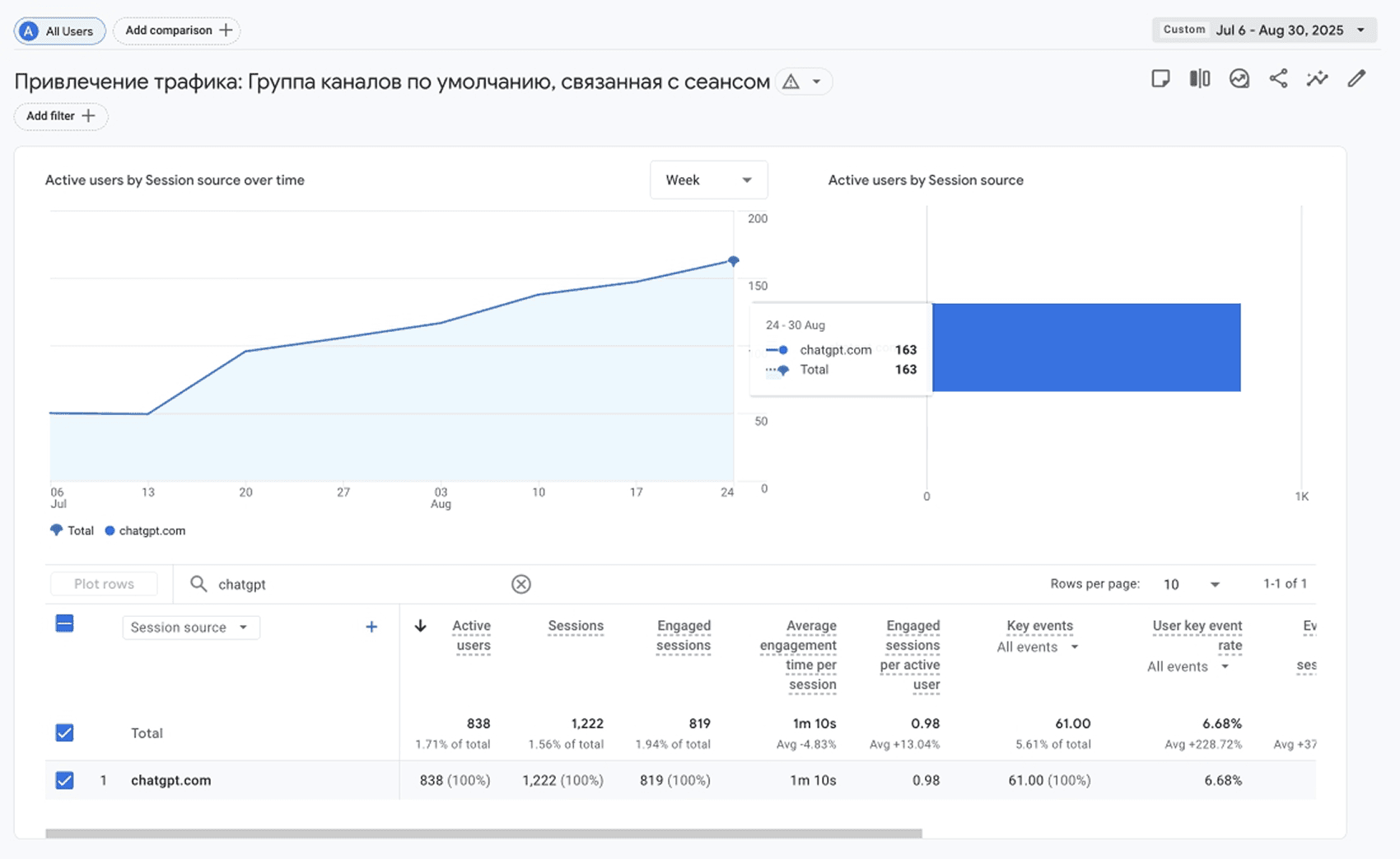
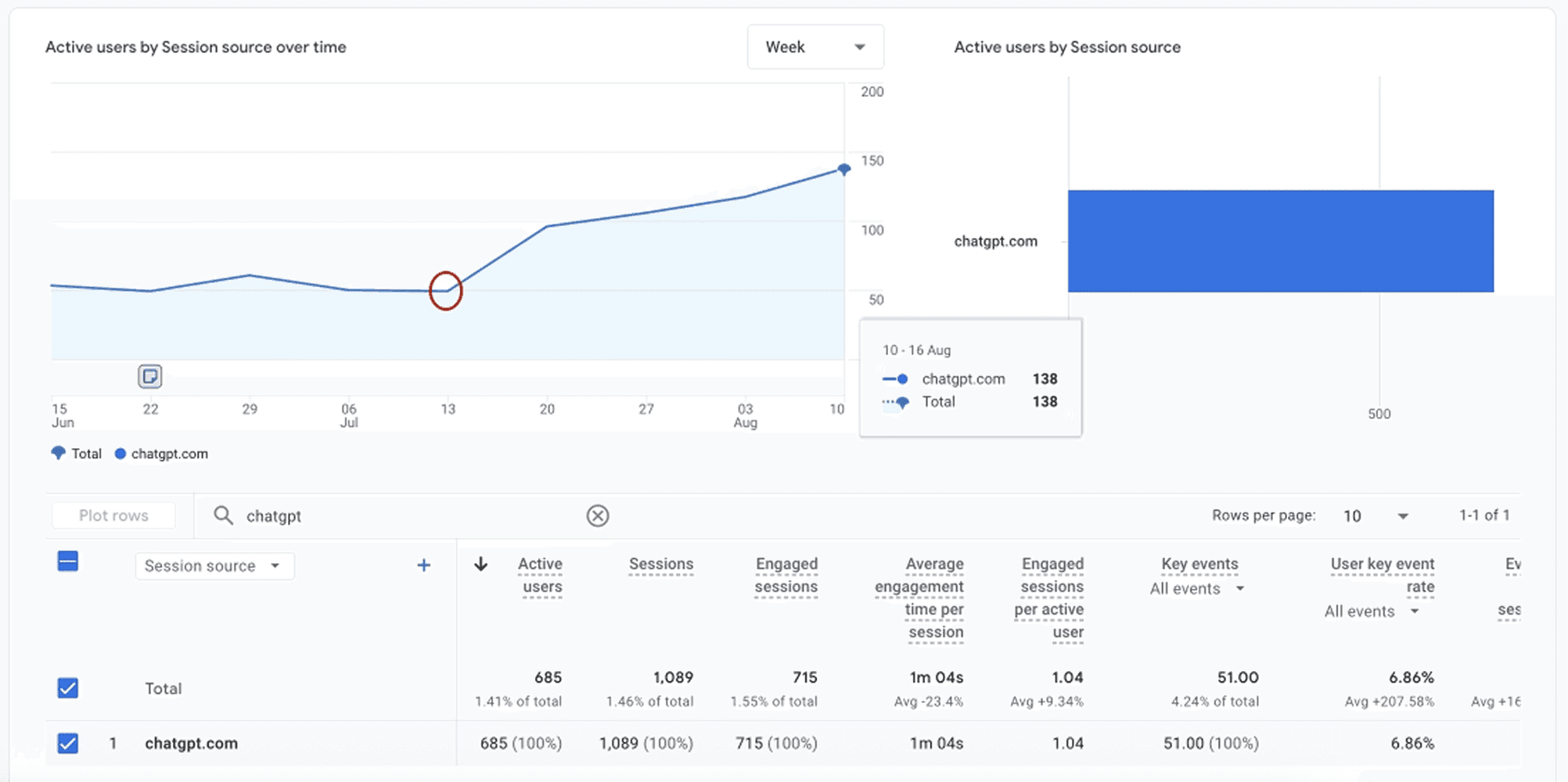
1) Traffic from ChatGPT & other AI sources (GA4 + UTM)
Before (baseline):
ChatGPT traffic was low and inconsistent (AI was not a reliable acquisition channel)
After (~55 days):
ChatGPT traffic increased by +220% (2.2×)
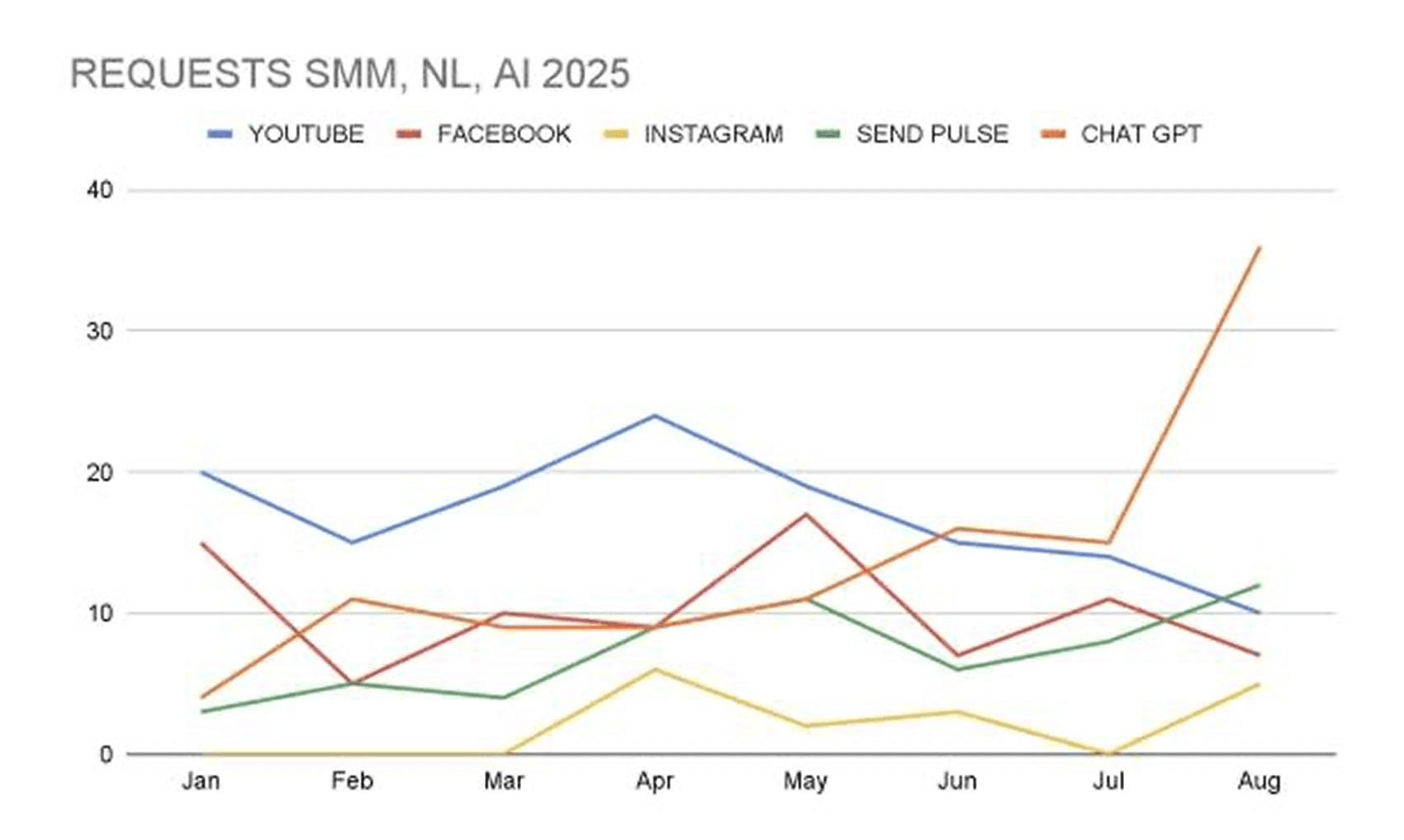
2) Leads from ChatGPT (volume + quality)
Before (baseline):
7-13 unverified leads/month from ChatGPT

After (~55 days):
50-60 unverified leads/month from ChatGPT
Before (baseline):
~10 verified leads / month (confirmed/qualified)
After (~55 days):
38 verified leads / month (confirmed/qualified)
verified ChatGPT leads spiked almost 4×
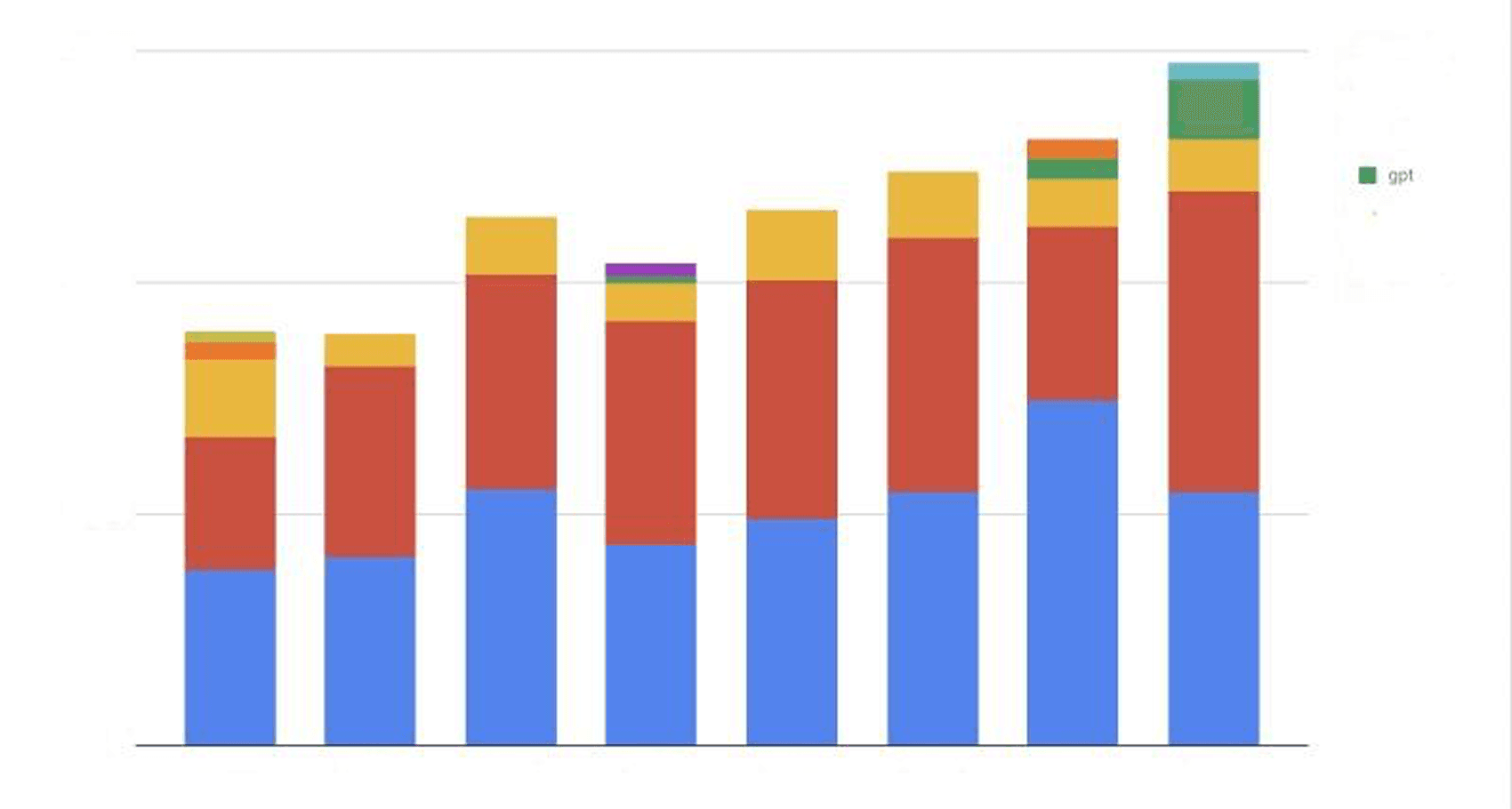
3) Profit from AI traffic (NDA-safe presentation)
Before (baseline):
No consistent profit from ChatGPT/AI
One isolated month around ~$5,000 (not repeatable)
After (during the engagement):
July 10–July 30: $16,000+ profit attributed to ChatGPT
August:$60,000+ profit from ChatGPT (AI became a meaningful revenue source)
What We Tracked (and Why)
We set up measurement so we could see both “visibility” and business impact.
The goal wasn’t just to “show up” in AI answers — it was to get ChatGPT traffic from high-intent prompts and turn those visits into consultations.
Funnel metrics (GA4 + UTM)
Sales / profit from AI traffic (bottom-funnel)
Verified leads (quality)
Unverified leads (volume)
AI traffic (top-of-funnel scale)
AI visibility metrics (top-of-funnel)
In parallel, we tracked brand presence inside AI answers:
plus competitive benchmarking across all of the above
We also mapped the third-party portals most frequently cited by AI for medical tourism prompts — and used that to plan external publications.
What We Did (Month by Month): What Worked vs What Didn’t
In AI SEO, there’s rarely one “magic switch.” Results usually come from a combined effect of trust signals + AI readability + structured content.
Month 1 (July 10 – end of July): Foundation + critical fixes
1) Improved schema / JSON-LD — worked
This made it easier for AI crawlers to extract facts and understand entities (services, page structure, authorship, etc.).
2) Fixed an issue with external link attachments — worked
Underrated point: broken or incorrectly embedded external links can hurt trust and citability.
3) Fixed errors in “Terms of Use & Privacy Policy” — no confirmed impact
We cleaned it up for hygiene and trust, but we didn’t observe a measurable lift attributable to this change alone.
4) Added trust elements + breadcrumbs — worked
added proof points (e.g., number of clients served / experience — within NDA limits)
linked to reviews/testimonials
added breadcrumbs to strengthen site structure and navigation clarity
This improved trust signals for both users and bots.
Month 2 (August – September 15): Multimodality + authorship + external trust
5) Added video + audio to blog pages with proper markup — worked
AI models “digest” content better when it’s not a giant wall of text. Multimodality gives:
more quotable fragments
clearer structure
additional quality signals
6) Added schema for tables and images on blog pages — worked
We made content that used to be “invisible” (images, complex tables) more machine-readable.
7) Upgraded author pages + markup + social links + certifications — worked
In medical topics, this is huge. Authorship and expertise are among the strongest trust signals:
proper schema
social profile links
expanded bios
certifications/background (within NDA limits)
8) Adjusted slugs (URL structure) — unclear impact
We did this for consistency, but didn’t see a distinct, attributable uplift during the case window.
9) Added clinic pages + JSON-LD — unclear impact
This is strategically correct, but we didn’t observe a clear measurable jump within this timeframe.
10) Added audio versions of pages (accessibility) + schema — unclear impact Great for users and accessibility, but no direct measurable lift in AI metrics in this case period
External Publications (Additional Growth Lever)
In August, we also published 4 articles on third-party resources that:
ranked well and appeared frequently in AI answers for our tracked prompts
were commonly cited by AI in the medical tourism space
This added external trust signals and helped AI recognize the brand as a credible entity in the niche.
Why It Worked (AI SEO Logic)
In short, we did two things:
Made the site easier for AI to read and extract facts from
(structure + JSON-LD + multimodal assets)Increased entity trust
(authorship, social proof, reviews, external publications, consistent brand information)
So when an AI assistant sees a query like “where to arrange treatment in Europe,” it’s more likely to:
find clear facts on the site
validate credibility via external sources
recommend the brand and send traffic
Key Takeaways (Repeatable Playbook)
If you want to grow inside AI answers, this is the practical sequence:
Set up measurement (UTM → GA4 → leads → verified leads → sales)
Fix AI readability (schema/JSON-LD, crawlability, structure)
Strengthen onsite trust (authors, reviews, proof points, breadcrumbs)
Add multimodality + markup (video/audio/tables/images)
Build external mentions on sources AI already trusts
Track AI visibility (SOV, recommendation rate, average position) and benchmark vs competitors