
Jump to
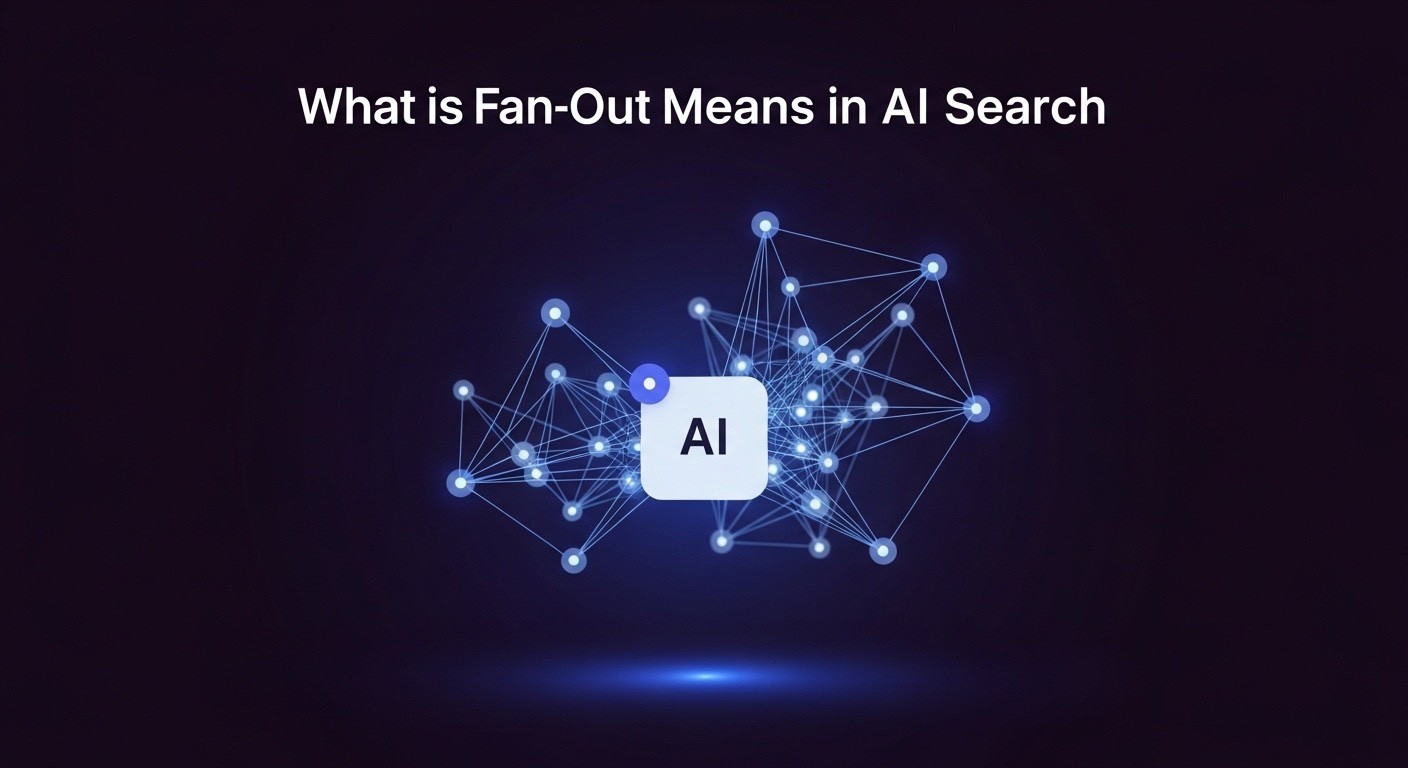
What is fan out in the context of AI search? In distributed systems, fan-out refers to the expansion of a single request into multiple parallel sub-requests. In modern AI-driven retrieval, this mechanism plays a central role in how answers are generated, synthesized, and ranked.
What does fan out mean for visibility? Instead of matching one query to one indexed page, AI systems distribute the original intent across multiple sources, aggregate signals, and then construct a response. This process directly influences brand exposure, content inclusion, and answer formation.
From a practical perspective, query fan-out reshapes distribution patterns and performance metrics. Based on internal monitoring frameworks discussed on the Dabudai blog, distributed retrieval models create new strategic requirements for structured authority and signal clarity.
What Is Fan Out in Modern Search Architecture?

Query fan-out is a mechanism where one search request is expanded into multiple parallel queries targeting different datasets or content clusters. Instead of sequential retrieval, the system performs simultaneous data extraction and aggregates results before producing output.
This structure improves scalability. By distributing workload across nodes or retrieval pipelines, AI systems reduce bottlenecks and increase contextual coverage.
Simplified Diagram:
User Query
→ Intent Parsing
→ Parallel Sub-Queries
→ Signal Aggregation
→ Synthesized Answer
In traditional architectures, one ranked list is returned. In fan-out architecture, distributed signals are combined into a structured output.
What Does Fan Out Mean for AI Mode?
Query fan out AI mode guide discussions often focus on how AI Mode differs from conventional ranking models. In AI Mode, the system distributes semantic intent across structured repositories, knowledge graphs, documentation hubs, and authoritative pages.
Traditional Retrieval vs AI Mode Fan-Out
Model | Process | Output Type | Visibility Impact |
Traditional Search | Rank indexed pages | Ordered list | Click-based exposure |
AI Mode Fan-Out | Distribute & aggregate signals | Synthesized response | Citation-based exposure |
This shift changes performance evaluation. Visibility becomes dependent on structured signals rather than position alone.
LLM Query Fan Out and Distributed Reasoning

LLM query fan out expands retrieval into reasoning pathways. Large language models analyze multiple sources simultaneously, compare signals, and synthesize contextual outputs.
Research from distributed systems literature and public technical documentation from AI providers highlights how parallel inference improves reasoning depth. Instead of retrieving isolated pages, LLM frameworks evaluate authority, structure, and semantic coherence before generating output.
This distributed reasoning enhances contextual coverage but increases complexity. Signals such as authority, clarity, and structured formatting influence whether content becomes part of aggregated answers.
Performance and Scalability Implications
Fan-out architecture improves scalability but introduces latency trade-offs. More parallel queries increase computational load.
Single-Source vs Distributed Expansion
Metric | Single Retrieval | Fan-Out Model |
Speed | Faster | Moderate latency |
Coverage | Limited | Broad contextual reach |
Visibility Impact | Page-level | Signal-level inclusion |
Performance | Linear | Distributed |
The fan-out model improves coverage and contextual performance but requires efficient aggregation layers to maintain speed.
Monitoring and Optimization Strategy

Monitoring distributed visibility requires different metrics. Instead of tracking ranking positions alone, organizations must analyze citation frequency, signal inclusion, and structured clarity.
Using an ai search visibility tool, teams can inspect distribution signals and identify whether content is included in fan-out aggregation processes. Monitoring dashboards help detect shifts in performance patterns and exposure frequency.
Optimization strategies include:
Strengthening structured data
Improving content architecture
Enhancing authority signals
Maintaining transparent sourcing
These improvements support inclusion in distributed reasoning workflows.
Trust, Signals and Authority in Distributed Search

Fan-out systems evaluate signals of trust and authority across multiple sources. Content structure, references, and semantic coherence influence aggregation probability.
As noted in AI research discussions from major technical providers, distributed retrieval depends on signal weighting rather than simple keyword matching. Clear sourcing, structured formatting, and authoritative references increase likelihood of inclusion in synthesized responses.
From practical monitoring experience, structured frameworks outperform fragmented content in fan-out environments. Authority becomes measurable through aggregated signals rather than isolated rankings.
FAQ
1. What is query fan-out in AI search systems?
Query fan-out is a process where a single search request is distributed into multiple parallel sub-requests to gather broader contextual data and improve answer generation.
2. What does fan out mean in AI Mode?
In AI Mode, fan out refers to distributing signals across indexed sources to generate a synthesized response instead of ranking a single page.
3. How does LLM query fan out improve performance?
LLM query fan out increases coverage and reasoning depth by analyzing multiple data sources simultaneously, improving contextual accuracy.
4. What is the difference between traditional search and query fan-out architecture?
Traditional search retrieves ranked pages, while fan-out frameworks distribute requests, aggregate signals, and synthesize structured responses.
5. How can websites optimize for query fan-out systems?
Websites should improve structured data, authority signals, technical structure, and monitoring practices to enhance inclusion in distributed AI retrieval processes.